MAJOR ASPECTS
Trine
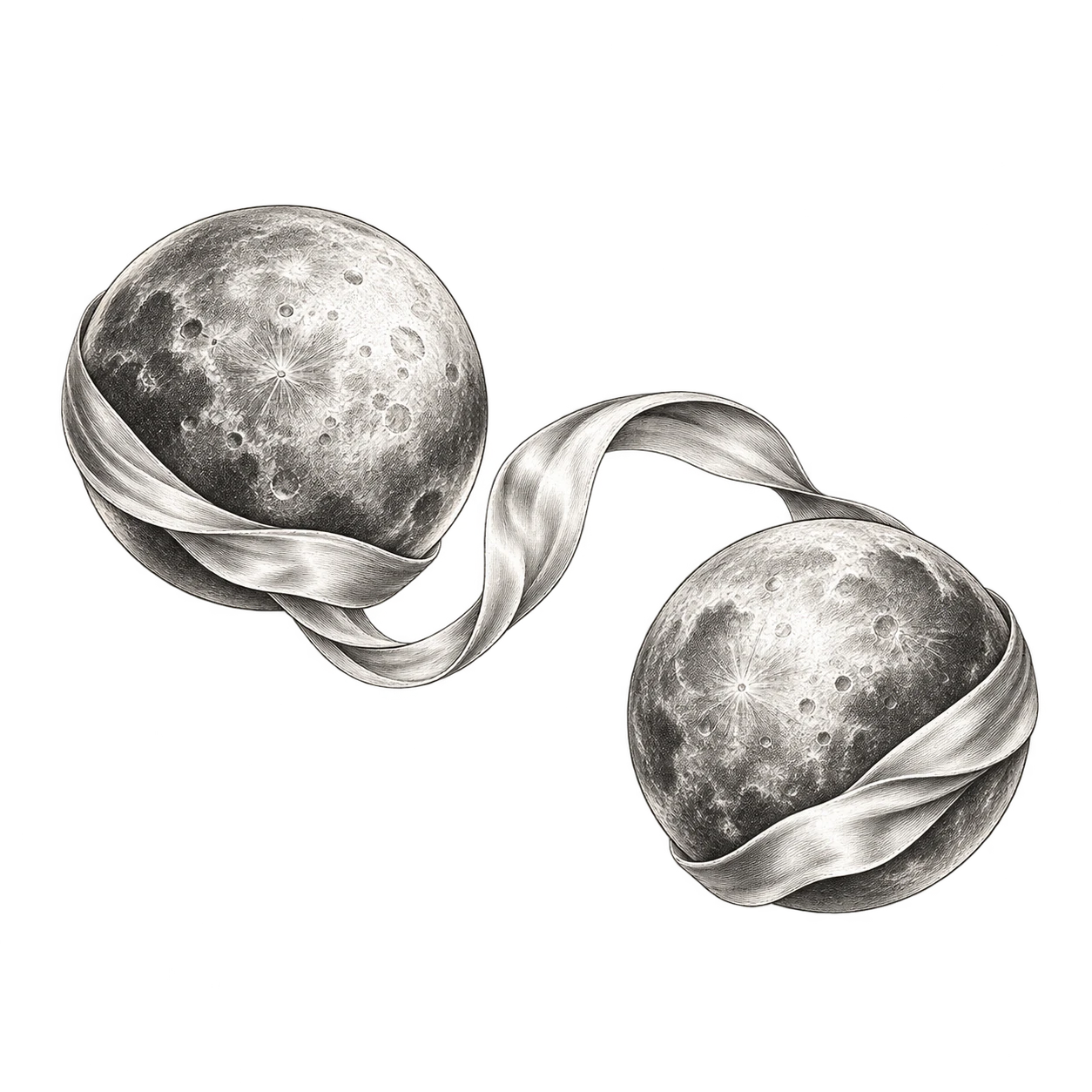
A trine is a 120° relationship, symbolically an easy exchange in which two functions can support one another.
The idea in context
At 120°, two chart functions support one another through a relatively fluent exchange.
MAKE IT CONCRETE
An example to picture
A hypothetical Moon–Venus trine may frame comfort and affection feeling easy to combine.
How to read it
Identify the cooperating needs and ask how the ease is used, rather than assuming it will always be noticed or developed.
A common misunderstanding
A trine does not prove talent or guarantee good outcomes; something comfortable can also become habitual.
BRING IT BACK TO YOUR LIFE
A question to sit with
Which natural ease would become more valuable with deliberate practice?
Go deeper: the full reference
How to work with it
The natural ease is a strength, while conscious use keeps the gift from becoming passive or taken for granted.
Detection policy
Synastry uses a maximum natal orb of 7° for this aspect. The exact orb is calculated from zodiac longitudes.
See the aspect in context
An aspect can connect two natal placements, a current planet with a natal placement, or placements from two people’s charts. Choose the corresponding tool and keep those contexts distinct as you read the aspect and its orb.
Connect the ideas
Conjunction
At 0°, two chart functions come together and operate as one concentrated pattern.
1 min read
Sextile
At 60°, two chart functions form a cooperative opening that supports exchange and growth.
1 min read
Square
At 90°, two chart functions meet through productive friction that demands adjustment.
1 min read
Opposition
At 180°, two chart functions face one another across a polarity that asks for awareness and balance.
1 min read