114 READINGS · FROM FOUNDATIONS TO FINER DETAILS
Western astrology
Learn the planets, signs, houses and relationships that turn a wheel into a reading. Each reading gives you a plain-language explanation, an example and a question to take back to your chart.
NEW TO THIS?
A good place to begin.
These three short readings introduce the language you will use throughout the guide.
Planets, signs, houses, and aspects
A natal reading combines several calculated layers instead of treating any one placement as a complete personality verdict.
1 min readSun
The Sun symbolizes identity, vitality, creative will, and the direction in which a person learns to shine.
1 min read
Trine
At 120°, two chart functions support one another through a relatively fluent exchange.
1 min readFIND YOUR NEXT QUESTION
Explore the chapters
114 readings
Foundations
4 readingsPlanets, signs, houses, and aspects
A natal reading combines several calculated layers instead of treating any one placement as a complete personality verdict.
1 min readDegrees and orbs
Each zodiac sign spans 30°, numbered from 0° through 29°. Each degree contains 60 arcminutes (′). The exact 0°–360° longitude drives the angular geometry used to detect aspects and their orbs; a degree is a position, not a strength score.
1 min readWhat a house is
Houses are 12 time- and location-dependent chart sectors bounded by calculated cusps. A planet’s house identifies the symbolic life area where astrological tradition considers that planet’s themes; it is not another zodiac sign.
1 min readDraconic astrology: true and mean nodes
A Draconic chart rotates the zodiac reference so the selected natal North Node is at 0° Aries. It is a different frame for the same birth moment, not a separate set of planetary positions.
2 min readLunar phases
8 readingsNew Moon
A symbolic beginning point, where energy gathers privately before its direction is fully visible.
2 min readWaxing Crescent Moon
The first growth phase, symbolically associated with supporting an intention before certainty arrives.
2 min readFirst Quarter Moon
A turning point in the cycle, traditionally linked with choice, effort, and movement through resistance.
2 min readWaxing Gibbous Moon
A phase of adjustment before culmination, associated with improving, developing, and preparing something to be shared.
2 min readFull Moon
The cycle’s point of greatest visibility, symbolically connected with awareness, culmination, and learning through contrast.
2 min readWaning Gibbous Moon
After culmination, the cycle turns toward sharing what has been learned and giving experience a useful form.
2 min readLast Quarter Moon
A second turning point, symbolically associated with reconsidering priorities and changing structures that no longer fit.
2 min readWaning Crescent Moon
The closing phase of the cycle, traditionally linked with integration, release, and making space for renewal.
2 min readPlanets & points
19 readingsSun
The Sun symbolizes identity, vitality, creative will, and the direction in which a person learns to shine.
1 min readMoon
The Moon symbolizes emotional needs, instinctive responses, habits, memory, and the experience of safety and belonging.
1 min readMercury
Mercury symbolizes thinking, learning, language, perception, and the way information is exchanged and organized.
1 min readVenus
Venus symbolizes attraction, relating, values, pleasure, aesthetics, and the ways harmony and reciprocity are cultivated.
1 min readMars
Mars symbolizes drive, desire, assertion, courage, conflict, and the way energy is mobilized into action.
1 min readJupiter
Jupiter symbolizes growth, confidence, opportunity, belief, and the search for a larger perspective or guiding meaning.
1 min readSaturn
Saturn symbolizes structure, responsibility, boundaries, time, and the patient work through which competence and mastery develop.
1 min readUranus
Uranus symbolizes freedom, disruption, originality, awakening, and the impulse to break patterns that have become too restrictive.
1 min readNeptune
Neptune symbolizes imagination, ideals, sensitivity, surrender, and the porous boundary between inspiration and projection.
1 min readPluto
Pluto symbolizes transformation, power, compulsion, exposure, and the process of releasing what can no longer remain unchanged.
1 min readMean Black Moon Lilith
Mean Black Moon Lilith is the Swiss-calculated mean lunar apogee. It is not asteroid Lilith or the osculating True Lilith point. Astrological tradition uses it to reflect themes of autonomy, exclusion, desire, and the parts of experience that resist being made socially convenient.
1 min readCeres
Ceres is a dwarf planet associated in astrological tradition with care, nourishment, attachment, separation, and the cycles through which support is given and received.
1 min readPart of Fortune
The Part of Fortune is a calculated lot derived from the Ascendant, Sun, and Moon with a day-or-night formula. Astrological tradition uses it to reflect embodied ease, circumstances, and the integration of identity and instinct.
1 min readChiron
Chiron is an astronomically calculated centaur. Astrological tradition uses it to explore vulnerability, meaning-making, mentorship, and the ways difficult experience may inform care.
1 min readTrue North Node
The True North Node is the instantaneous ascending intersection of the Moon’s orbit with the ecliptic. Astrological tradition uses it to reflect unfamiliar growth, direction, and developing capacities.
1 min readSouth Node
The South Node is the exact descending antipode of the True North Node. Astrological tradition uses it to reflect familiar patterns, established capacities, and material that may need rebalancing.
1 min readVesta
Vesta is an asteroid associated in astrological tradition with focus, devotion, stewardship, boundaries, and sustained attention.
1 min readJuno
Juno is an asteroid associated in astrological tradition with commitment, agreements, mutuality, power-sharing, and partnership expectations.
1 min readPallas
Pallas is an asteroid associated in astrological tradition with strategy, pattern recognition, creative intelligence, advocacy, and practical problem-solving.
1 min readZodiac signs
12 readingsAries
In a placement, Aries describes an initiating, direct, independent, and courageous style.
1 min readTaurus
In a placement, Taurus describes a steady, patient, embodied, and security-minded style.
1 min readGemini
In a placement, Gemini describes a curious, adaptable, verbal, and connection-seeking style.
1 min readCancer
In a placement, Cancer describes a protective, intuitive, receptive, and nurturing style.
1 min readLeo
In a placement, Leo describes an expressive, creative, warm, and self-possessed style.
1 min readVirgo
In a placement, Virgo describes a discerning, practical, precise, and improvement-led style.
1 min readLibra
In a placement, Libra describes a relational, diplomatic, aesthetic, and balancing style.
1 min readScorpio
In a placement, Scorpio describes an intense, private, probing, and transformative style.
1 min readSagittarius
In a placement, Sagittarius describes an exploratory, candid, optimistic, and meaning-led style.
1 min readCapricorn
In a placement, Capricorn describes a disciplined, strategic, restrained, and enduring style.
1 min readAquarius
In a placement, Aquarius describes an independent, inventive, principled, and collective style.
1 min readPisces
In a placement, Pisces describes an imaginative, empathic, receptive, and boundary-soft style.
1 min readHouses
12 readings
The 1st House
Astrological tradition associates this house with identity, presence, embodiment, and first approach.
1 min read
The 2nd House
Astrological tradition associates this house with resources, values, self-worth, and material security.
1 min read
The 3rd House
Astrological tradition associates this house with communication, learning, siblings, and local life.
1 min read
The 4th House
Astrological tradition associates this house with home, roots, family patterns, and the private base.
1 min read
The 5th House
Astrological tradition associates this house with creativity, pleasure, romance, and self-expression.
1 min read
The 6th House
Astrological tradition associates this house with daily work, health routines, service, and craft.
1 min read
The 7th House
Astrological tradition associates this house with partnership, commitment, negotiation, and one-to-one bonds.
1 min read
The 8th House
Astrological tradition associates this house with intimacy, trust, shared resources, and transformation.
1 min read
The 9th House
Astrological tradition associates this house with belief, higher learning, travel, and the search for meaning.
1 min read
The 10th House
Astrological tradition associates this house with vocation, public contribution, responsibility, and reputation.
1 min read
The 11th House
Astrological tradition associates this house with friendship, community, collaboration, and future aims.
1 min read
The 12th House
Astrological tradition associates this house with solitude, the unconscious, closure, and spiritual retreat.
1 min readAngles
4 readings
Ascendant (ASC)
The Ascendant is the calculated eastern-horizon intersection at the recorded moment and place of birth. In symbolic astrology, it describes the immediate approach to experience, embodied presence, and the manner in which a person enters unfamiliar situations.
2 min read
Descendant (DSC)
The Descendant is the calculated western-horizon intersection opposite the Ascendant at the recorded moment and place of birth. In symbolic astrology, it describes the threshold of one-to-one encounter, qualities sought or noticed in others, and the work of mutual negotiation.
2 min read
Midheaven (MC)
The Midheaven is the calculated upper-meridian intersection used by the selected house calculation. In symbolic astrology, it describes public direction, visible responsibility, reputation, vocation, and the kind of contribution developed over time.
2 min read
Imum Coeli (IC)
The Imum Coeli is the calculated lower-meridian intersection opposite the Midheaven in the selected house calculation. In symbolic astrology, it describes private foundations, roots, home, memory, and the inner conditions that support or complicate public life.
2 min readMajor aspects
5 readings
Conjunction
At 0°, two chart functions come together and operate as one concentrated pattern.
1 min read
Sextile
At 60°, two chart functions form a cooperative opening that supports exchange and growth.
1 min read
Square
At 90°, two chart functions meet through productive friction that demands adjustment.
1 min readTrine
At 120°, two chart functions support one another through a relatively fluent exchange.
1 min read
Opposition
At 180°, two chart functions face one another across a polarity that asks for awareness and balance.
1 min readMinor aspects
6 readings
Semisextile
At 30°, two chart functions make a subtle connection that often needs deliberate translation.
1 min read
Semisquare
At 45°, two chart functions meet through low-volume friction that can become noticeable through repetition.
1 min read
Quintile
At 72°, two chart functions form a fifth-harmonic link traditionally associated with creative arrangement and skill.
1 min read
Sesquisquare
At 135°, two chart functions form an eighth-harmonic tension that may press for refinement and a change of approach.
1 min read
Biquintile
At 144°, two chart functions form a fifth-harmonic link traditionally associated with pattern-making and developed ingenuity.
1 min read
Quincunx/Inconjunct
At 150°, two chart functions operate at an angle traditionally associated with ongoing recalibration between unlike needs.
1 min readPatterns
12 readingsGrand Sextile
Six bodies form a complete hexagonal lattice of six sextiles, six trines, and three oppositions.
2 min readGrand Cross
Four bodies form two oppositions whose endpoints are joined by four squares.
2 min readKite
A Grand Trine is focused by a fourth body that opposes one trine vertex and sextiles the other two.
2 min readMystic Rectangle
Four bodies form two oppositions, two trines, and two sextiles, with each body participating in one aspect of each type.
2 min readCradle
Four bodies form one opposition, two trines, and three sextiles.
2 min readBoomerang Yod
A Yod is completed by a fourth body opposite its apex and semisextile both bodies at the Yod’s base.
2 min readGrand Trine
Three bodies are each connected to the other two by trines.
2 min readT-Square
Two bodies oppose each other and both square a third, apex body.
2 min readYod
Two sextile bodies each form a quincunx to a third, apex body.
2 min readMinor Grand Trine
Two bodies in trine both form sextiles to a third, focal body.
2 min readThor's Hammer
Two bodies in square each form a sesquisquare to a third, apex body.
2 min readStellium
At least three bodies form a maximal group in which every pair is within the configured conjunction orb.
2 min readAstrocartography
13 readingsWhat an astrocartography map shows
An astrocartography map places the birth sky on a world map by marking where each supported body meets one of four angular conditions at the recorded birth instant.
3 min readAC lines: presence and beginnings
An AC line marks the locations where a body meets the eastern side of the modeled horizon at the recorded birth instant.
2 min readDC lines: encounter and agreement
A DC line marks the locations where a body meets the western side of the modeled horizon at the recorded birth instant.
2 min readMC lines: public direction and contribution
An MC line marks upper meridian transit for a body at the recorded birth instant.
2 min readIC lines: home and private foundations
An IC line marks lower meridian transit, opposite the MC meridian family for the same body at the recorded birth instant.
2 min readWhy birth time matters on the map
Angular lines depend on Earth’s orientation at the recorded birth instant, so an uncertain time can shift the geographic result.
2 min readCombine a planet with an angle
The planetary theme and angular context do different jobs. Read them together before assigning meaning to a line.
2 min readDistance bands in the native calculation model
Choose a city or populated place to calculate its shortest distance from the angular lines. Proximity describes geometry; the interpretation remains a separate symbolic reading.
3 min readRead several nearby lines together
Several lines near one place offer several symbolic questions. Their meanings do not automatically add up to a single score.
2 min readA native-model example: connection and responsibility
Follow a fictional two-line city reading from the calculated labels to a useful question. Its invented distances illustrate the web reading method without claiming to describe a real person or place.
2 min readWhy lines bend, split or stop
The shape of a line follows the chosen angular condition and the way a globe is displayed on a flat map.
2 min readAstrocartography, relocated charts and transits
A natal angular map, a relocated chart and a transit chart ask different questions and need their own calculations.
2 min readUse the map as a question, not a destination verdict
Astrocartography can organize reflection about a place, while decisions about living or traveling depend on real conditions and personal circumstances.
2 min readHouse systems
7 readingsPlacidus
A time-based quadrant system that divides the diurnal and nocturnal motion used to define intermediate house cusps. The Ascendant and Midheaven anchor the 1st and 10th cusps.
2 min readWhole Sign
The entire zodiac sign containing the Ascendant is the 1st House. Each following sign forms the next house, with cusps at sign boundaries.
2 min readEqual House
The exact Ascendant degree begins the 1st House, followed by eleven equal 30° sectors along the zodiac.
2 min readKoch
A time-based quadrant system using the birthplace latitude and the diurnal arc associated with the Midheaven to construct intermediate cusps.
2 min readPorphyry
Each zodiacal arc between successive primary angles is divided into three equal portions to form the intermediate house cusps.
1 min readRegiomontanus
Equal divisions of the celestial equator are projected onto the ecliptic through house circles associated with the horizon.
1 min readCampanus
Equal divisions of the prime vertical, the great circle through east, zenith, west and nadir, are projected onto the ecliptic through house circles.
1 min readQuadrants
4 readings
Lunar nodes
1 readingElements
4 readings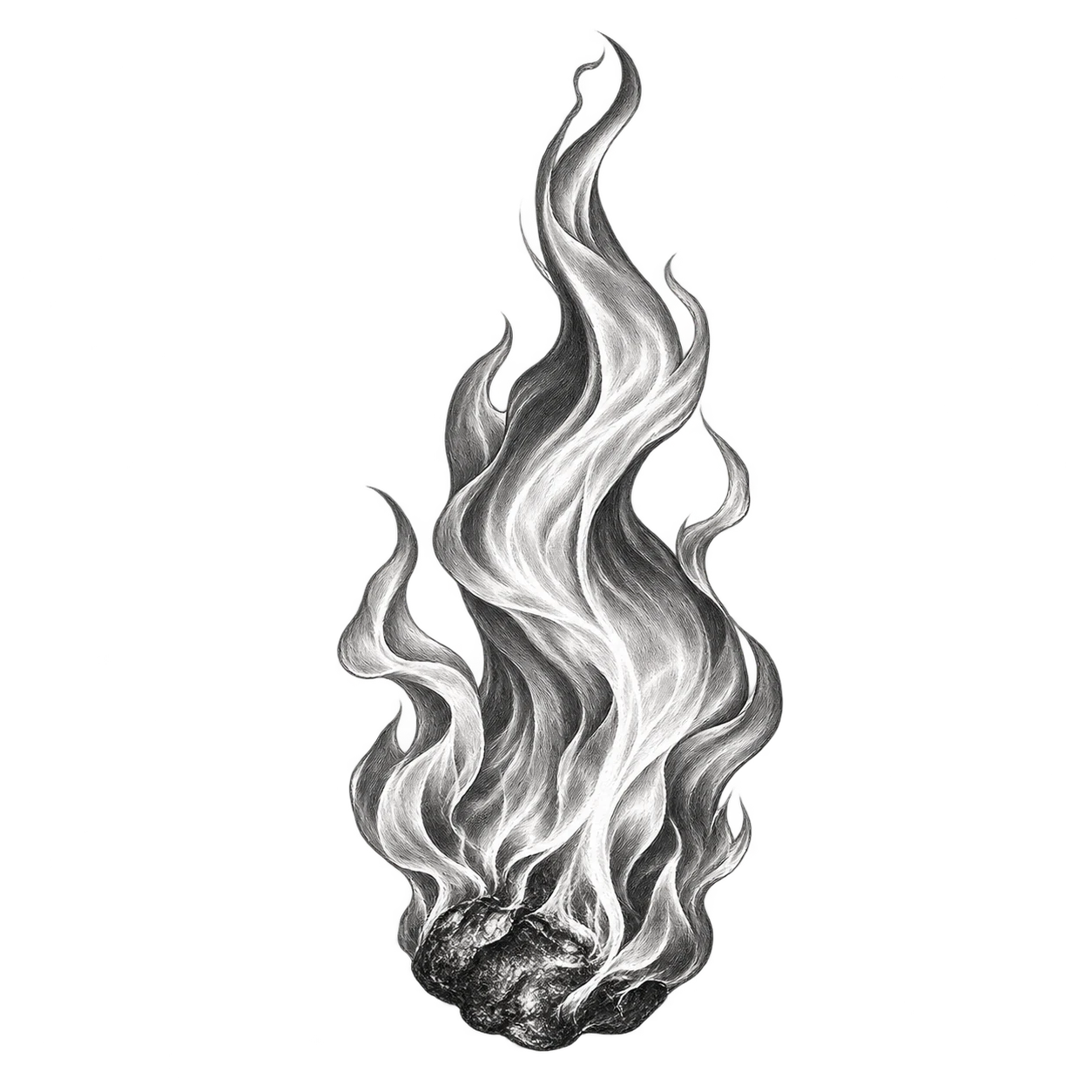
Fire
Fire symbolizes initiative, enthusiasm, and the wish to express or explore.
1 min read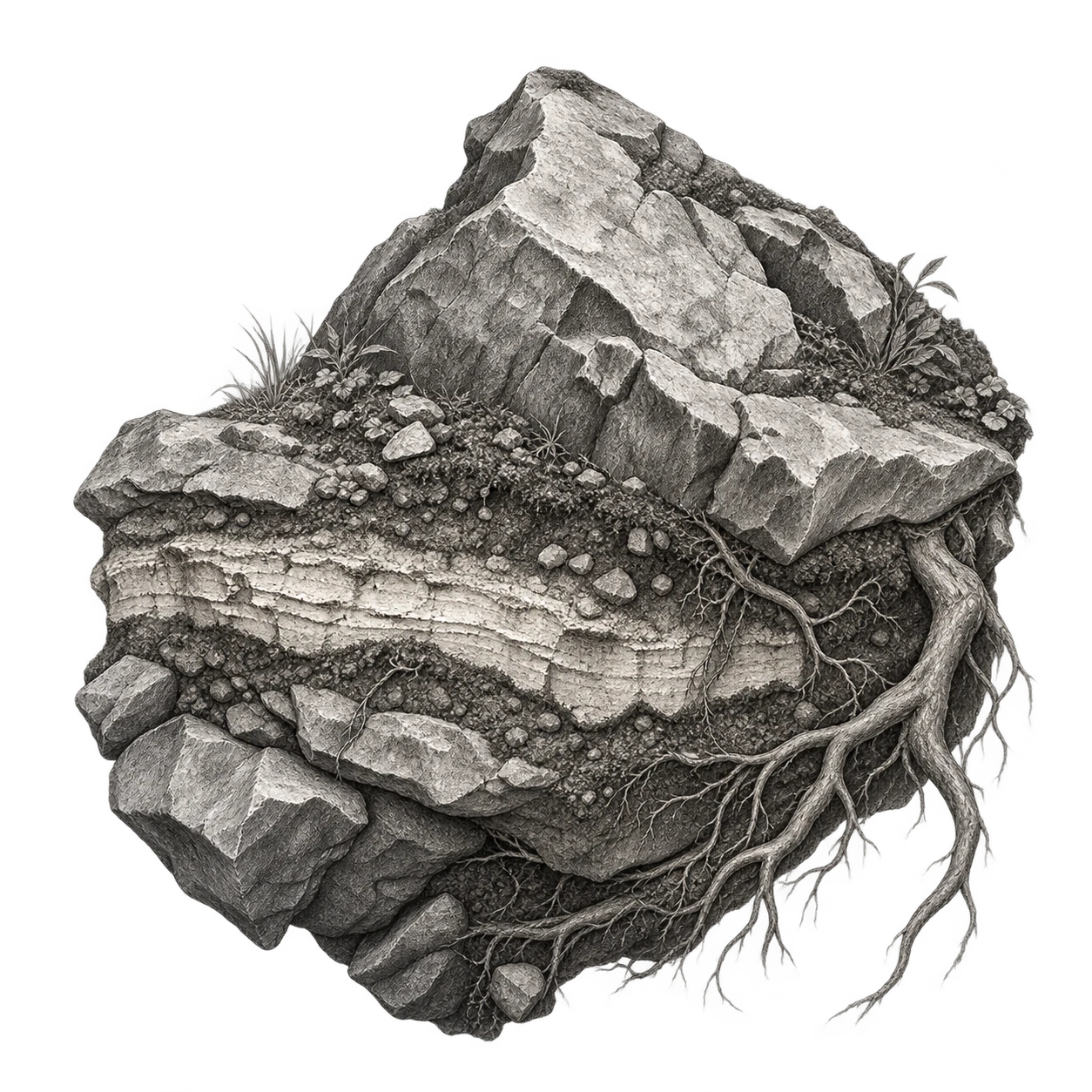
Earth
Earth symbolizes practical attention, steady effort, and the care of tangible needs.
1 min read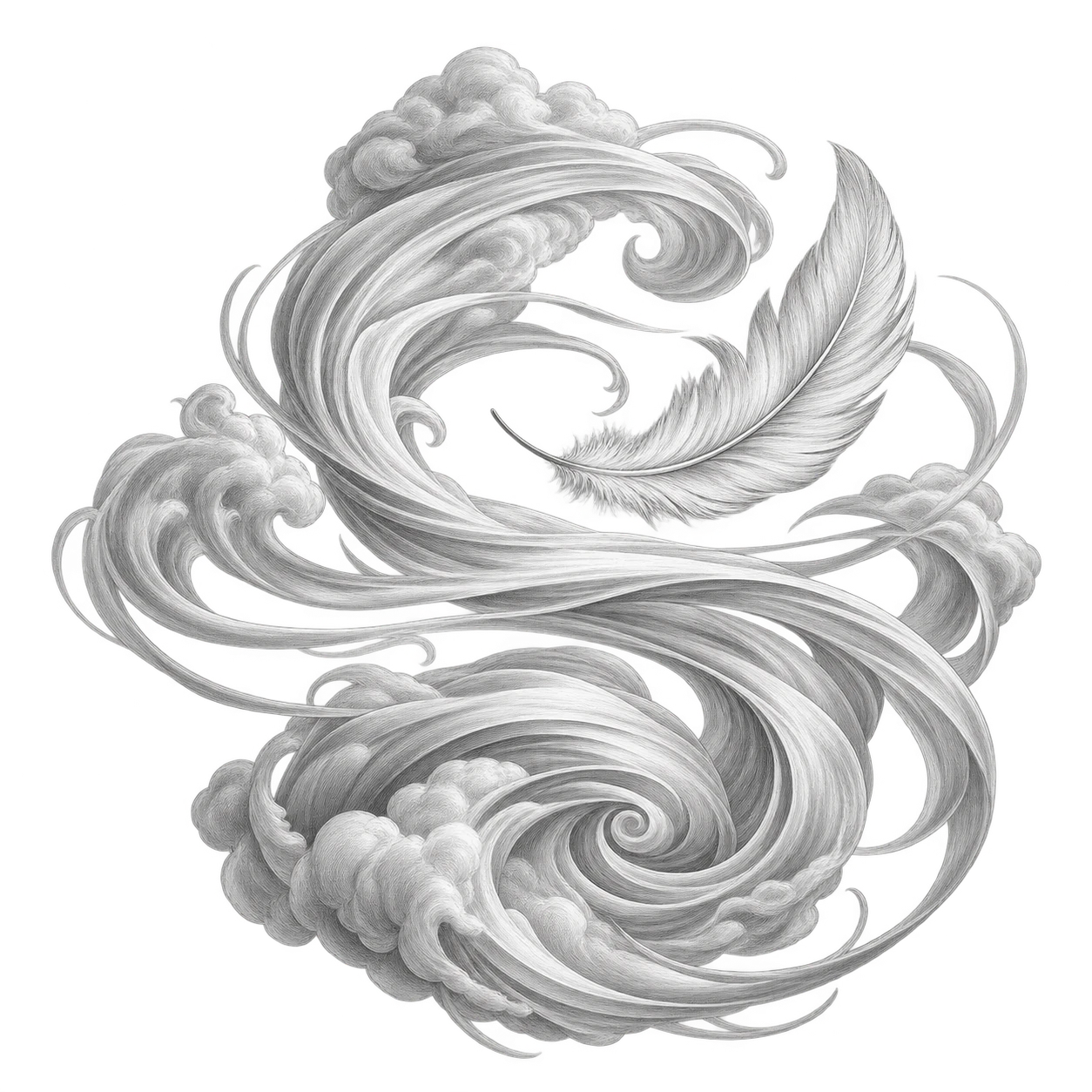
Air
Air symbolizes ideas, language, and the exchange of perspectives.
1 min read
Water
Water symbolizes feeling, imagination, and sensitivity to emotional experience.
1 min read